The Role of Table Limits in Your Blackjack Strategy
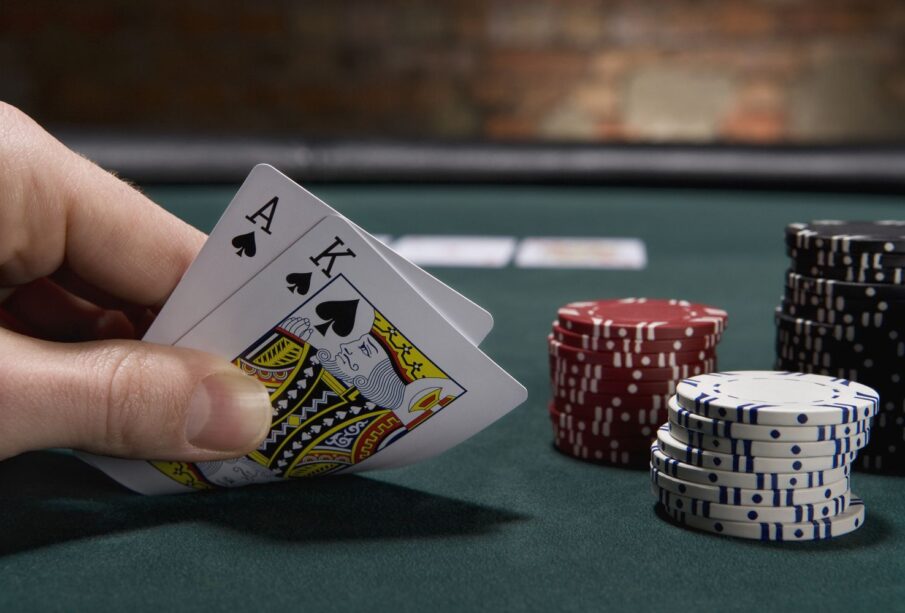
When players discuss blackjack strategy, the conversation almost always revolves around basic strategy charts, card counting systems, or deciding when to hit, stand, double down, or split. Players spend countless hours memorizing mathematical matrices to reduce the casino house edge to its absolute minimum. Yet, a critical factor that directly governs whether a blackjack strategy succeeds or fails is completely decided before a single card is dealt: the selection of the table limits.
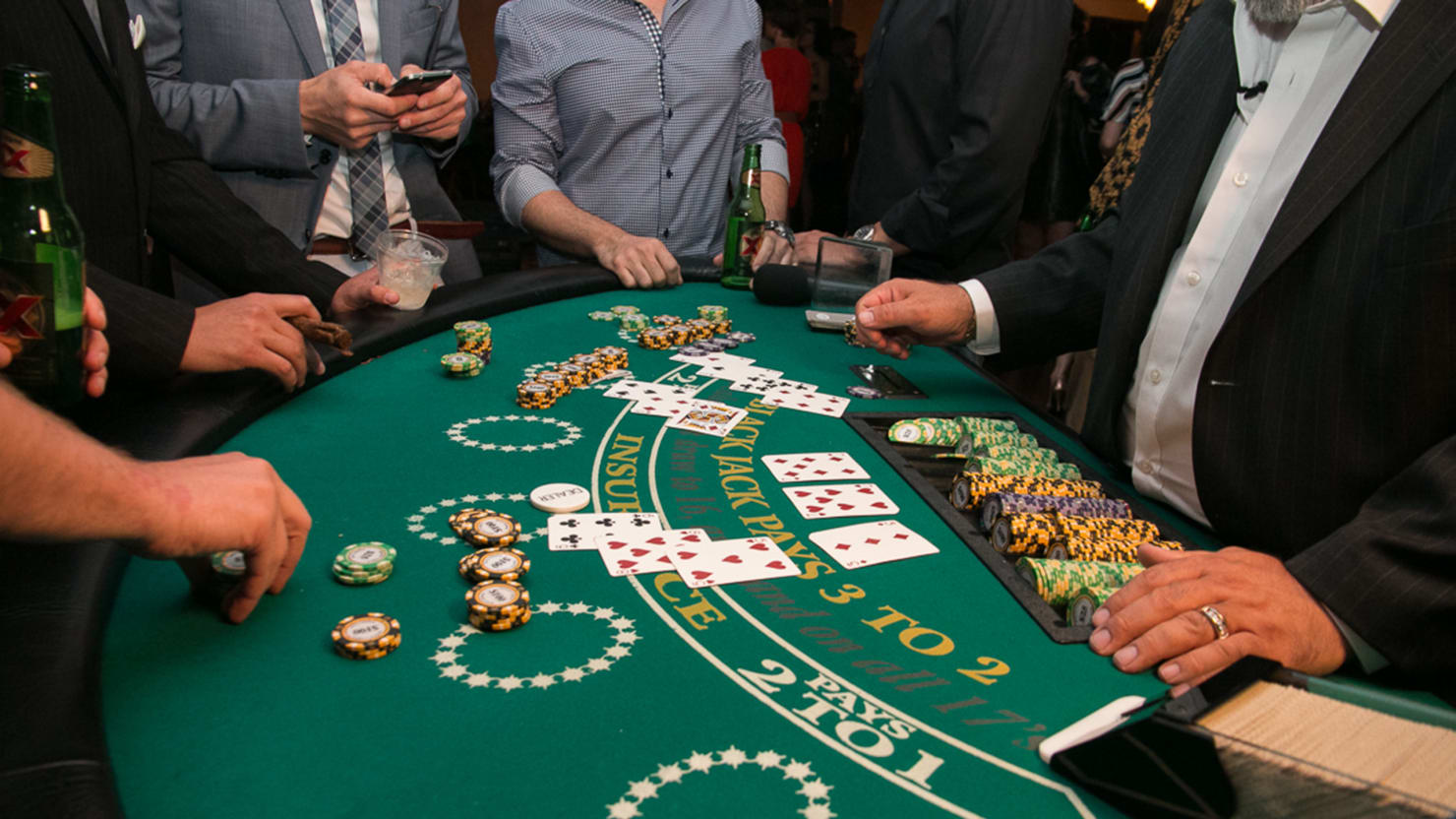
Every blackjack table, whether located on a physical casino floor or hosted by a digital gambling platform, operates under a set of rigid boundaries known as table limits. These boundaries define the minimum and maximum amount of money a player can wager on a single hand. Far from being simple regulatory labels, table limits serve as the architectural framework for your entire session. They dictate your bankroll longevity, govern the mathematical viability of progressive wagering systems, and actively impact your psychological composure during periods of high variance.
The Direct Relationship Between Table Minimums and Bankroll Survival
The most critical interaction between a player and a table limit occurs at the minimum boundary. A fundamental rule of smart gambling is that your total session bankroll must be large enough to withstand the natural statistical fluctuations of the game. Even when playing with flawless basic strategy, blackjack is prone to sudden, severe losing streaks due to mathematical variance.
If you choose a table minimum that is too high relative to your total funds, you severely compress your survival window. For example, if you sit down at a traditional casino table with a five hundred dollar bankroll, the table minimum will completely dictate your mathematical risk of ruin:
-
At a twenty-five dollar minimum table: Your bankroll represents exactly twenty baseline betting units. A standard statistical downswing of eight consecutive lost hands, coupled with a few doubled downs or splits that fail to convert, can completely wipe out your entire capital in under fifteen minutes.
-
At a five dollar minimum table: That exact same five hundred dollar bankroll expands to one hundred baseline betting units. This massive buffer gives you the structural durability needed to absorb a prolonged cold deck, allowing you to survive long enough for the statistical averages to normalize.
Professional players recommend maintaining a session bankroll equal to at least forty to fifty times the table minimum for casual play, and upwards of one hundred times the minimum if you plan to employ active betting spreads or progressive sizing techniques. Selecting a table where the minimum bet forces you to risk an uncomfortable percentage of your total funds is a structural error that negates any tactical edge you might possess through card play.
How Maximum Table Limits Constrain Progressive Betting Systems
While the table minimum acts as the floor protecting your bankroll, the table maximum serves as a hard ceiling that completely breaks certain betting methodologies. Many casual players rely on negative progression wagering strategies, the most famous of which is the Martingale system. Under a Martingale strategy, a player doubles their bet size after every single loss, operating under the assumption that an eventual winning hand will recover all previous losses and secure a net profit equal to the original baseline wager.
The absolute nemesis of the Martingale system is the maximum table limit. Casinos do not implement maximum limits out of a fear that a billionaire will win a single massive hand; they implement them specifically to protect their built-in house mathematical advantage against progression tracking.
Consider a standard real-world scenario where a blackjack table features a minimum limit of ten dollars and a maximum limit of one thousand dollars. If a player encounters a common cold run of consecutive losses, the compounding nature of doubling geometric sequences reveals a fatal structural flaw:
-
First Bet: Ten dollars (Loss)
-
Second Bet: Twenty dollars (Loss)
-
Third Bet: Forty dollars (Loss)
-
Fourth Bet: Eighty dollars (Loss)
-
Fifth Bet: One hundred sixty dollars (Loss)
-
Sixth Bet: Three hundred twenty dollars (Loss)
-
Seventh Bet: Six hundred forty dollars (Loss)
When the player loses the seventh hand in a row, the Martingale system mandates that the eighth bet must be one thousand two hundred eighty dollars. However, because the table cap is set strictly at one thousand dollars, the player is legally blocked from placing the required wager. The progression breaks completely. The player is forced to place the flat maximum bet of one thousand dollars, meaning even if they win that eighth hand, they cannot fully recover their accumulated losses. The presence of the maximum limit ensures that progressive systems will always eventually fail during deep statistical downswings.
The Vital Hidden Factor: Rules Tended to Correlate with Limits
A hidden danger that catches many novice players off guard is the systemic correlation between table limits and the mathematical rules of the game. Casinos routinely adjust blackjack rules based on the limit tier of the table to maximize their profit margins on lower stakes players.
On low-limit tables, typically those featuring five, ten, or fifteen dollar minimums, casinos frequently implement unfavorable rules to exploit casual crowds. The most prominent example is changing the payout structure for a natural blackjack from the classic three-to-two ratio down to a predatory six-to-five ratio. This single rule change increases the built-in casino house edge by approximately one point four percent, making it drastically harder for a basic strategy player to remain profitable over time.
Conversely, higher limit tables, such as those found in high-limit salons or VIP rooms with one hundred dollar minimums, are much more likely to offer player-friendly rules. These tables routinely retain the traditional three-to-two payouts, allow players to double down after splitting pairs, force the dealer to stand on soft seventeen hands, and offer late surrender options. Therefore, players must balance the desire for a cheap table minimum against the mathematical reality that low stakes tables often feature degraded rules that silently drain your bankroll at an accelerated rate.
Incorporating Splits and Double Downs into the Limit Equation
A common mistake when aligning a blackjack strategy with table limits is calculating your unit sizes purely based on a single static initial bet. A correct mathematical approach must account for the fact that blackjack requires you to frequently inject extra capital into a hand while the round is actively in progress.
According to basic strategy guidelines, you must double your bet when the math dictates you have a distinct positional advantage over the dealer, such as holding a total of eleven against a dealer low card. Furthermore, when you are dealt pairs like a matching set of eights, you must split them into two separate hands, which requires placing an additional wager equal to your original starting stake. If you are dealt consecutive splitting opportunities, you could easily end up risking three or four times your initial bet on a single round.
If you choose a table minimum that sits at the absolute ceiling of your financial comfort zone, you will likely experience psychological paralysis when these scenarios arise. A player who is undercapitalized will often commit the cardinal sin of turning down a valid double down or split opportunity out of pure fear of losing the extra money. This fear-based hesitation ruins the mathematical efficiency of basic strategy and immediately gives the advantage back to the house. You should only play at a table limit where you feel completely comfortable doubling or tripling your active investment on any individual hand without a moment of hesitation.
Conclusion
Every successful blackjack blueprint requires complete harmony between your external capital assets, your mathematical sizing mechanics, and the institutional boundaries established by the casino. Table limits are not passive numbers; they are active forces that dictate the reality of your play. By selecting table minimums that provide a massive operational cushion for variance, respecting the hard ceilings that break progressive betting models, and avoiding the rule traps commonly embedded in low-limit tiers, you transform table limits from a restrictive barrier into a strategic asset that preserves your bankroll and maximizes your long term competitive potential.
Frequently Asked Questions
Why do casinos raise their table minimums on weekends and during major holidays?
Casinos view table space as valuable real estate. When foot traffic increases dramatically during peak hours, the demand for seats rises. To maximize overall corporate revenue, operators raise the minimum entry limits to filter out low spending casual players and ensure that every available seat is occupied by individuals wagering higher amounts per round.
Can I ask a live casino pit boss to lower the minimum limit at an empty blackjack table?
While a casino floor supervisor has the administrative authority to adjust table limits, they will rarely lower a minimum threshold simply upon player request. The limits are typically dictated by strict corporate scheduling matrices based on expected daily volume. However, if you are a verified high roller or possess a high tier casino loyalty status card, management may occasionally accommodate a request to create a private betting space tailored to your needs.
Are table limits different when playing live dealer blackjack online versus software games?
Yes, digital platforms typically offer drastically lower minimum table limits on random number generator software games, sometimes allowing wagers as low as fifty cents or one dollar per hand because digital software incurs near zero operational overhead costs. Online live dealer tables, which require physical studio space, real equipment, and human dealer salaries, feature higher minimum boundaries that closely mirror those found in physical casinos.
Does a table maximum limit also apply to side bets like Perfect Pairs or 21 plus 3?
Side bets feature completely independent limit structures that are separate from the main blackjack hand boundaries. Typically, the maximum allowed wager for a side bet is significantly lower than the primary table maximum, often capped at twenty five or fifty dollars. This is because side bets feature much higher payout volatility odds, such as thirty-to-one, and casinos limit their exposure to prevent sudden, massive payouts on highly volatile outcomes.
What is a mid shoe entry restriction and how does it relate to table limits?
Many high limit blackjack tables display a sign stating no mid shoe entry. This operational rule prevents players from entering the game or changing seats while the current shoe of cards is actively in play, forcing them to wait until the next dealer shuffle. This rule is designed specifically to thwart card counters, who try to wander the casino floor looking for tables where the deck has become mathematically favorable before jumping in to place high limit wagers.
If I am playing multiple hands simultaneously, does the table minimum apply to each spot?
Yes, if you choose to play two or three hands at the same spot on the layout at the same time, the table minimum boundary applies to each individual betting circle independently. In fact, many land based casinos enforce a house policy that requires players to wager at least double the posted table minimum on each hand if they choose to occupy multiple spots simultaneously, as a compensation mechanism for taking up seats that could otherwise be utilized by other individual players.